Going AFK: Turning Teams chats into handshakes at UW’s IT Support Symposium
“It’s always nice to spend some time putting faces to screens,“ said Jennifer Kuo, a Senior Cyberdefense Analyst in DoIT Cybersecurity Operations. “Otherwise, I’m just a flat 2D image.“
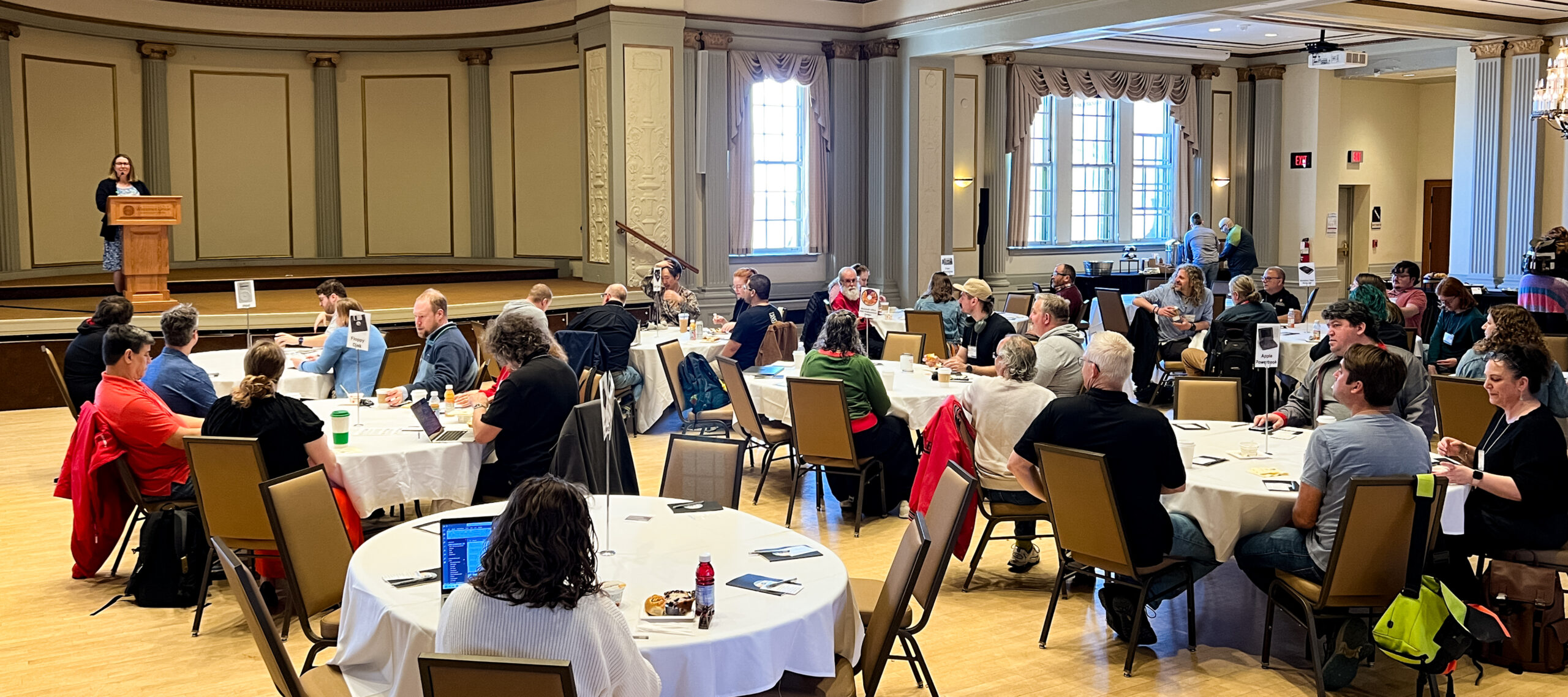
Jennifer was one of 71 IT support professionals from 39 departments who gathered at Memorial Union on April 21 for the second annual IT Support Symposium — a half-day of facilitated discussions and collaborative problem-solving organized by a volunteer committee.
Help desk specialists, desktop support technicians, system engineers, instructional designers and IT managers all took part — many meeting in person for the first time after years of working together remotely.
In good company
The morning began in the Great Hall at Memorial Union with a “raise your hand if“ warm-up activity to bring attendees together around shared experiences.
Chuckles and groans accompanied hands as they shot up in response to prompts such as remoting into a machine to fix something you can’t fully explain, looking up a KnowledgeBase article while helping a caller, and working with lab equipment you have no idea how to use but can somehow fix.
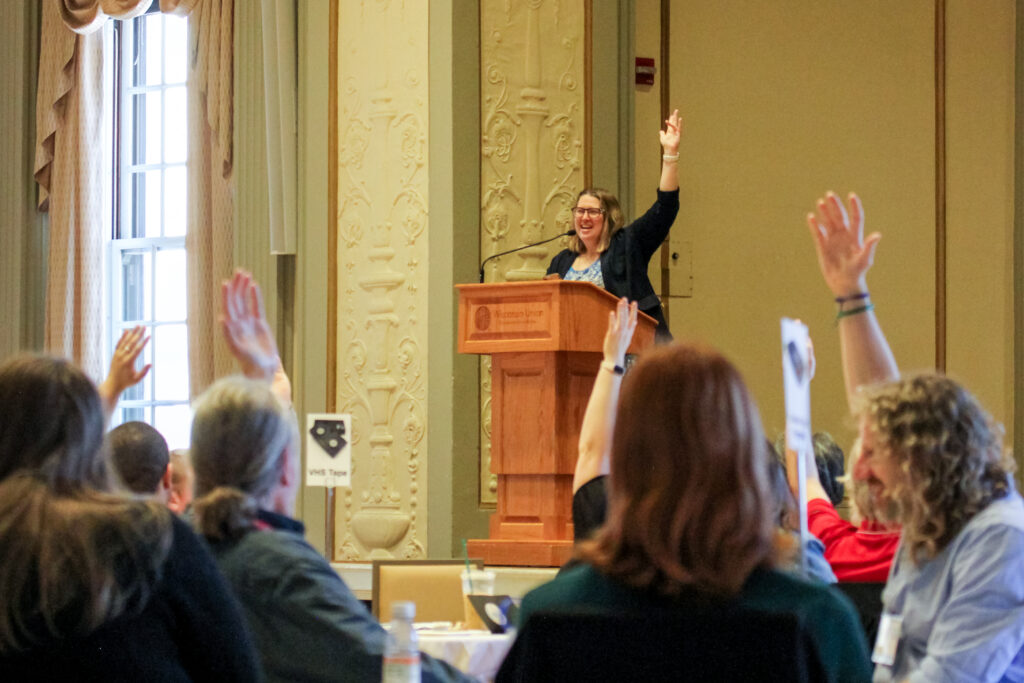
Ella Tschopik, an IT/AV Manager and creator of the event, served as emcee. She drew on her recent experience with an IT reorganization at the School of Education to frame her invocation for the day.
“It’s easy to get so wrapped up in the day-to-day of tickets and reboots and updates and meetings that it can be refreshing — even revelatory — to take a step back and zoom out. … We are here today because we are curious, because we want to connect with new people and new ideas.“
’Your voice is heard’
Facilitated breakout sessions followed, covering topics selected by registrants. Facilitators guided discussions about pressing issues in the university’s IT support landscape.
Attendees got into the weeds about documentation, shared ideas for making their work more visible, considered the current state of AI tools, explored how to improve collaboration across units with the IT Federation Program, and more.
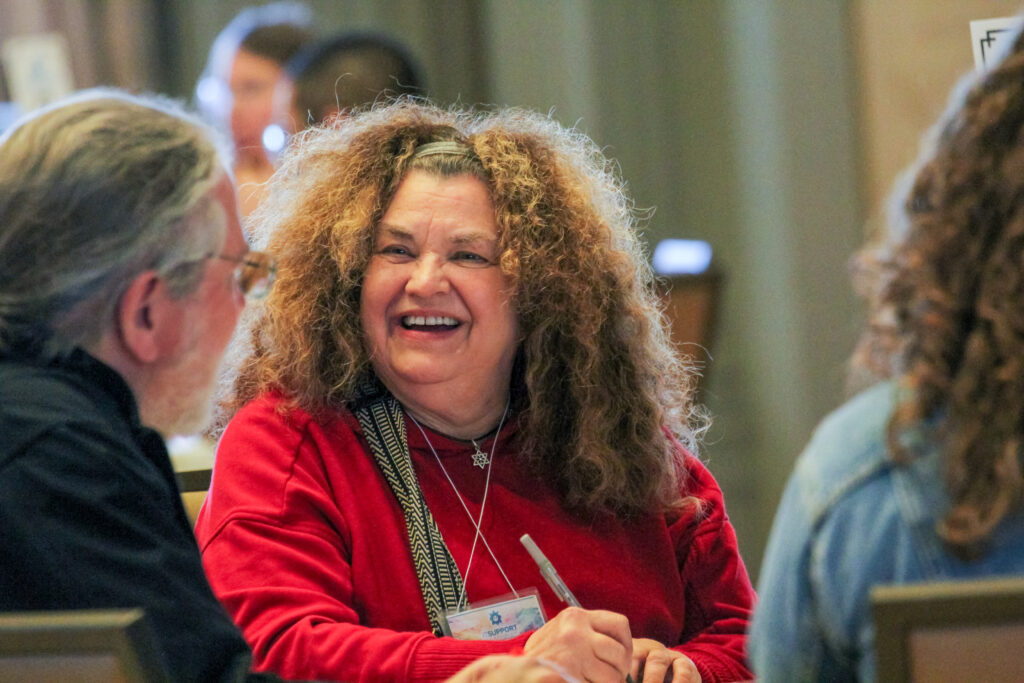
Across all sessions, a consistent theme emerged: the relationships IT professionals build outside of their departments are as essential to getting work done as any tool or process — and often harder to replace when organizations change.
“When I know who to go to, and I reach out to them on Teams … that system has been really successful,“ said Christiane Markley, a Desktop Support Technician. “When I have one of those, it’s like, ’Oh, we got this.’ I don’t have to think twice.“
After 27 years working in IT support in both the public and private sectors, Christiane has been on both ends of those ‘phone-a-friend’ calls countless times. Building those connections is what drew her to the symposium.
“You always ask, ’Can I fit this in?’ … But this is a good investment of time,“ she said. “Especially with this group. Because your voice is heard — it goes to somebody who’s listening.“
Building understanding
Following the breakout sessions, attendees reconvened in the Great Hall for a World Café — a format in which small groups rotate among tables, each anchored by a different question. Each time a group moved, they picked up where the previous group left off, layering ideas across multiple rounds while facilitators captured recurring themes on sticky notes.
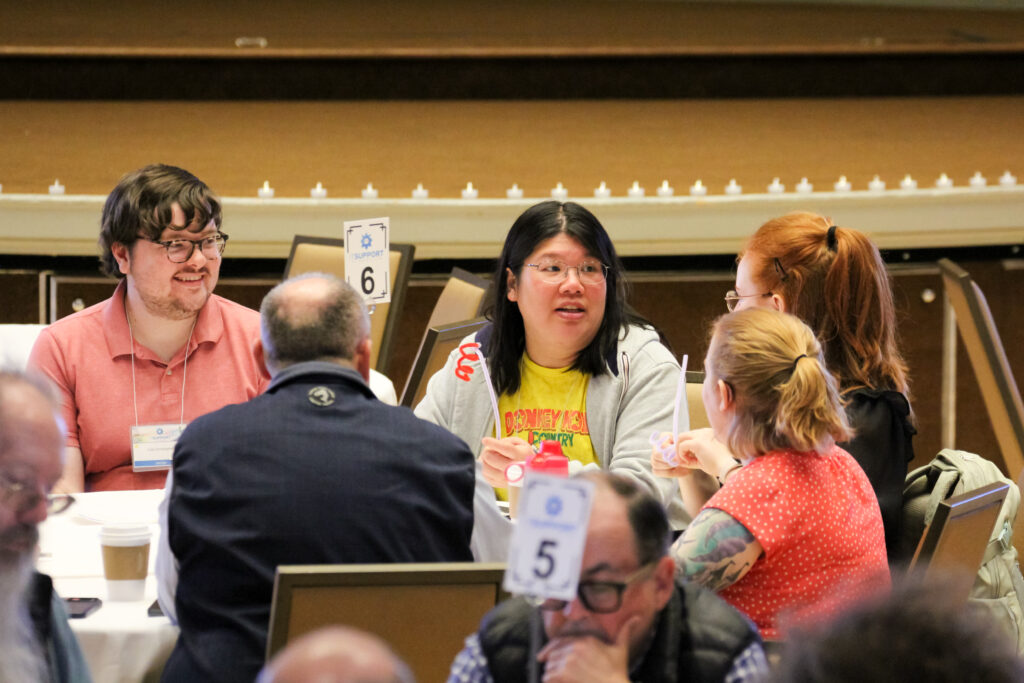
Across the tables, a few ideas kept surfacing: that personal relationships are how IT actually functions, that much of what IT does is invisible until it breaks, and that local knowledge and local accountability matter in ways that are hard to replace.
“Central IT has its use and part to play,“ one facilitator summarized. “But we need to preserve existing structures that work and trust local IT shop expertise — because we have context.“
For IT professionals who work primarily on distributed or departmental teams, the symposium offered something harder to put a number on: a reminder that the UW IT support community is large, interconnected and facing many of the same pressures.
One line from the day’s notes said it best: “Change can be good, but only if we are still asking ‘why’ something is the way it is to begin with — and if those reasons are still important.“